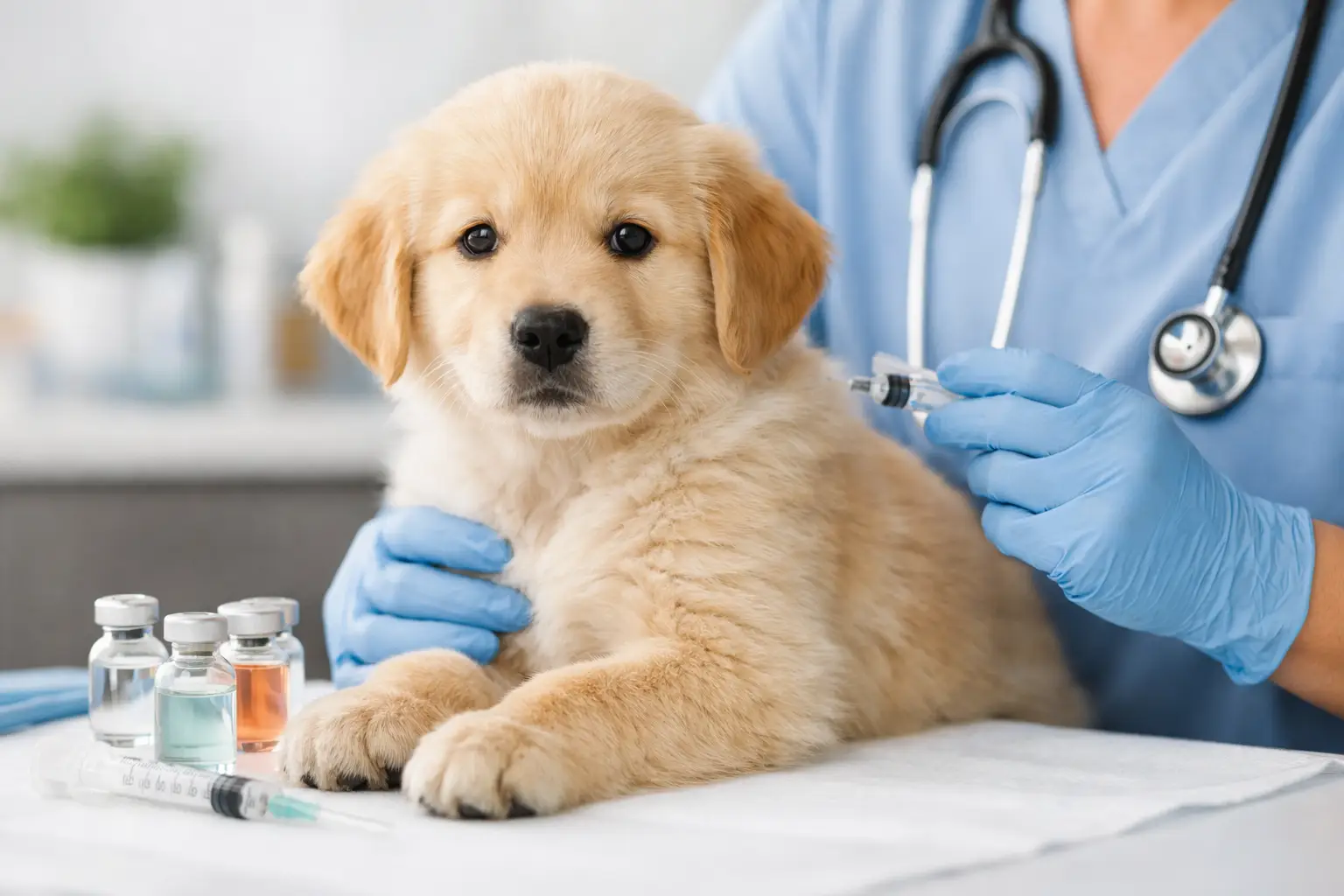
What Shots Do Puppies Need? US Vaccine Timeline
A puppy’s first playful pounce, sleepy lap nap, and enthusiastic terrier kiss are unforgettable. So is the responsibility that comes with bringing that little fur-ever family member home. If you are asking what shots do puppies need, the short answer is that every puppy needs core protection against serious contagious diseases, followed by a few vaccines chosen for their lifestyle, location, and travel plans.
The reassuring part is that you do not have to figure it out alone. A responsible breeder should provide the health and vaccination records for the care already given, while your veterinarian creates the schedule that takes your puppy through the final boosters and into adulthood. For a busy, curious terrier, staying on schedule helps protect the happy outings, puppy classes, and tail-wagging adventures ahead.
What shots do puppies need first?
In the United States, veterinarians generally divide vaccines into core and non-core vaccines. Core vaccines are recommended for nearly every puppy because the diseases are widespread, dangerous, or both. Non-core vaccines are not less valuable, but they are selected based on a puppy’s individual risk.
The key core combination vaccine may be labeled DAPP, DA2PP, DHPP, or a similar variation depending on the veterinary clinic. The initials can look confusing, but this vaccine typically protects against canine distemper, adenovirus or hepatitis, parvovirus, and parainfluenza. Your vet can explain exactly what is included in the product they use.
Distemper can affect a dog’s respiratory, digestive, and nervous systems and can be devastating. Parvovirus is especially feared by puppy families because it spreads easily and can cause severe vomiting, diarrhea, dehydration, and life-threatening illness. Adenovirus can contribute to respiratory disease and, in one form, infectious canine hepatitis. These are not risks to take lightly, particularly before a puppy has completed the full series.
Rabies is the other essential vaccine. It protects dogs and people from a fatal disease, and rabies vaccination is required by law in most US states and local jurisdictions. The timing and booster rules can differ by state and vaccine label, so follow your veterinarian’s direction.
A typical puppy vaccination timeline
Puppies receive a series rather than one single round of shots because antibodies from their mother can temporarily interfere with vaccine response. Those maternal antibodies are helpful early in life, but their level fades at a different pace in every puppy. Repeating the core vaccine at set intervals gives your puppy a dependable chance to build protection as that natural coverage declines.
A common schedule looks like this:
- 6 to 8 weeks: First DAPP-style core vaccine. Many puppies receive this before they leave their breeder, along with a wellness check and deworming plan.
- 9 to 12 weeks: Second DAPP-style vaccine. Your vet may discuss Bordetella, leptospirosis, Lyme disease, canine influenza, or other lifestyle vaccines at this visit.
- 12 to 16 weeks: Final puppy DAPP-style booster and rabies vaccine, according to local laws and your veterinarian’s recommendations.
- Around 1 year: Booster visits for core vaccines and rabies, then future boosters on the interval your veterinarian recommends.
This timeline is a useful starting point, not a substitute for personalized veterinary care. If a puppy begins vaccines later, misses an appointment, has an illness, or has an unknown medical history, the schedule may need adjusting. Bring every record you received at pickup to the first veterinary appointment so your vet can make informed decisions instead of repeating or delaying care unnecessarily.
Lifestyle shots your terrier may need
Terriers may be compact, but many have big energy, strong instincts, and a desire to investigate every corner of the yard. That lifestyle can shape which non-core vaccines make sense. The right question is not, “Does every puppy need every vaccine?” It is, “What exposure is likely for my puppy and my family?”
Bordetella is commonly recommended for puppies who will attend puppy kindergarten, boarding, grooming, doggy day care, dog shows, or other settings where dogs mix closely. It is often called a kennel cough vaccine, though respiratory illness can spread anywhere dogs gather. Some boarding and training facilities require it before admission.
Leptospirosis may be a smart choice for puppies exposed to wildlife, standing water, farms, rodents, or urban areas where infected animal urine can be present. Leptospirosis can make both dogs and people sick, which is one reason many veterinarians now discuss it more routinely. Local risk varies, so ask what your veterinarian sees in your area.
Lyme disease vaccination can be considered for puppies living in or traveling to tick-heavy regions, especially in the Northeast, Upper Midwest, and other places with known Lyme activity. Tick prevention still matters even if your puppy receives the vaccine. No vaccine replaces checking your dog for ticks and using the parasite control product recommended by your vet.
Canine influenza may be recommended when outbreaks occur locally or when a puppy will spend time around many unfamiliar dogs. It is more situation-dependent than DAPP or rabies, but a veterinarian may advise it for social, traveling, or frequently boarded dogs.
Your puppy’s age also matters. Some products have minimum-age requirements, and your vet may space vaccines over more than one visit. That approach can be especially helpful when a small puppy needs several kinds of care while still settling into a new home.
Vaccines, socialization, and safe puppy fun
New families often hear two pieces of advice that seem to conflict: keep your puppy away from disease until vaccinations are complete, but socialize them early. Both are true. The goal is thoughtful exposure, not total isolation or unnecessary risk.
Until your veterinarian says your puppy is adequately protected, avoid dog parks, pet-store floors, shared apartment dog runs, and places where unknown dogs may have used the bathroom. Parvovirus can persist in the environment, so a spot that looks clean is not automatically safe.
That does not mean your puppy must miss the socialization window. Invite healthy, fully vaccinated dogs you know to meet your puppy in a clean home or private yard. Carry your puppy on neighborhood walks, introduce household sounds and friendly visitors, practice gentle handling, and take short car rides. Ask your veterinarian about well-run puppy classes that require age-appropriate vaccines and careful sanitation.
For terrier puppies, these calm early experiences are more than a nice extra. They help build confidence around people, grooming, travel, and the lively everyday routines that make a well-socialized companion such a joy.
Questions to ask before and after pickup
A puppy should come home with clear paperwork, not vague assurances. Ask the breeder which vaccines have been given, the dates they were administered, the product name if available, and whether any deworming or wellness exam was completed. You also want to know when the next vaccine is due.
Schedule a new-puppy veterinary visit soon after homecoming, even when your puppy appears bright-eyed and healthy. This visit lets the vet check weight, heart and lungs, skin, eyes, ears, teeth, stool concerns, nutrition, parasite prevention, and the vaccination plan. It is also a good time to discuss microchipping, spaying or neutering timing, and breed-specific questions.
At Terrier Paws, families should expect health information to be part of a thoughtful puppy transition, not an afterthought. A screened breeder relationship, documented care, and a prompt visit with your own veterinarian give you a much steadier start than relying on assumptions.
A small record that makes a big difference
Keep your puppy’s vaccination certificate in one easy-to-find place, whether that is a folder, a pet-health app, or a photo saved securely on your phone. You may need it for training classes, boarding, grooming, travel, rental paperwork, or an emergency veterinary visit. Update it after every appointment.
Most of all, let your veterinarian be your puppy’s partner as they grow. The right vaccine plan is not about checking boxes. It is about giving your new terrier the best chance to spend their early months doing what puppies do best: learning, playing, exploring, and filling your home with kisses and tail wags.